Stairs: The Three Fixes That Matter Most
Mobility & Comfort · Home safety · 5 min read
Most stair falls are not caused by one dramatic slip. They come from a stack of small things: a step that cannot be seen clearly, a rail that stops short, and shoes that catch on the nosing. Three fixes deal with almost all of it, and none of them requires a builder.
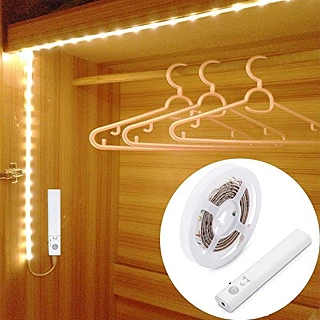
Fix one: make every step edge visible
The eye needs contrast to judge where a step ends. On a flight of pale carpet or plain wood, the edges blur together, and the foot lands short. Adding a strip of contrasting colour or light along each nosing turns a flat-looking slope back into countable steps.
Motion-activated strips solve the other half of the problem, which is that nobody switches a light on for a three-step trip to the bathroom. The light needs to arrive before the foot does, without anyone deciding to make it happen.
Fix two: light the top and the bottom, not just the middle
The two places people misjudge are the first step down and the last step up. Both are transitions, and both are usually the darkest part of the run because the switch is at one end and the landing light is at the other.
A plug-in light on the landing and another at the foot of the stairs removes the guesswork. Dimmable ones are worth the small extra cost: a light bright enough to wake someone up fully at 3am creates its own problem.
Fix three: fix the handrail, then the shoes
A handrail should start before the first step and continue past the last one, on both sides if the stairs allow it. A rail that ends level with the top step gives up exactly where the balance is worst. This is the one job that may need someone with a drill, and it is worth doing properly.
Then look down. Loose slippers, smooth soles and long dressing gowns account for more stair incidents than most people expect. A firm shoe with a back to it, worn indoors, is not glamorous and it works.
What to do before any of that
Clear the stairs completely. Nothing stored on a step, ever, not even for an afternoon. Check that the carpet is fixed down at every edge and that no rug sits at the top or bottom where it can slide.
If someone is already avoiding the stairs, hesitating at the top, or coming down sideways, that is worth mentioning to a doctor or an occupational therapist rather than solving with equipment alone.
A ten-minute stair check
- Stand at the top: can you see where each step ends?
- Stand at the bottom in the dark: does anything light up?
- Grip the rail at the very top and the very bottom step
- Push on the carpet edges with your hand for loose spots
- Look for anything stored on a tread or a landing
- Check the shoes actually worn on these stairs
What we stock for this
- GlowStep Motion Sensor LED Light Strip — rechargeable, mounts along a stair edge, no wiring
- SafePath Motion Sensor Night Lights, 6-Pack — dimmable plug-ins for the landing and the foot of the stairs
- SteadyStep Adjustable Walking Cane — height-adjustable, non-slip tip, for the trip either side of the stairs
Read next
General information for a home setting, not medical advice. If a fall, a wound or a change in health is involved, speak to a doctor or an occupational therapist.
Want to see the products for every room in one place? Read Looking for Fall Prevention Products? Start Here, Room by Room.


