Power Cuts, Alarms and Getting Help Fast
Daily Living Aids · Home safety · 4 min read
The plan for an emergency at home is only as good as the version that works in the dark, in a hurry, for someone who has just been woken up. That rules out most of what people write down and put in a folder.
The power cut is the ordinary emergency
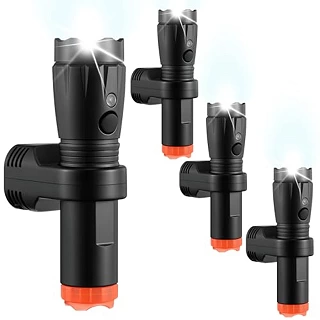
A torch only helps if you can find it, and the moment you need one is the moment you cannot. A unit that lives in a wall socket, charges itself and lights up the instant the power drops removes that whole problem. Pull it out of the socket and it becomes a torch you are already holding.
Put one in the hall, one in the bedroom and one near the stairs. Those are the three places where a sudden dark room turns into a fall.
Calling for help without a phone in hand
Phones end up on chargers in other rooms. A small alarm that clips to a belt, a bag or a walker, and that can be set off with one thumb, covers the gap. A loud siren brings a neighbour or a family member in the next room far faster than a call does, and it works even if speaking is difficult.
This is not the same thing as a monitored medical alert service, and it should not be sold as one. It is a way of making noise immediately. If someone lives alone and is at real risk of a fall, a monitored service or a check-in routine is the thing to arrange, and a personal alarm sits alongside it.
The alarms that should already be there
Working smoke detectors on every floor, and a carbon monoxide detector if there is any gas appliance, boiler, fire or attached garage. Carbon monoxide has no smell, and its early symptoms of headache and drowsiness are easy to put down to something else, which is exactly why a detector is not optional.
Units with a voice alert and a readable screen are worth choosing for an older household. A beep at 4am tells you nothing about which alarm it is or what it wants. A voice that says what is wrong, and a number you can read without glasses, removes a genuinely dangerous minute of confusion.
Test it on a fixed day
Pick the first of the month. Press the test button on every alarm. Check that the emergency lights are charged and that the personal alarm still sounds. It takes four minutes.
Write the important numbers somewhere large and fixed, near the phone or on the fridge: the family contact, the doctor, the pharmacy. Not only in a mobile phone.
The four-minute monthly check
- Test every smoke and carbon monoxide alarm
- Confirm plug-in emergency lights are charged and seated
- Sound the personal alarm once
- Check the written contact list is current and readable
- Replace any battery that has started chirping, that day
What we stock for this
- ReadyLight Plug-In Emergency Flashlight — auto-on during an outage, detaches as a torch
- CallOut Personal Safety Alarm — 130dB siren, rechargeable, clips to a belt or walker
- AirSafe Carbon Monoxide and Smoke Detector — voice alert and a readable screen instead of a bare beep
Read next
General information for a home setting, not medical advice. A personal safety alarm is not a monitored medical alert service and does not contact emergency services on your behalf. If you suspect carbon monoxide exposure, leave the building and call emergency services.


