Sitting for Hours: Cushions and Pressure Relief
Mobility & Comfort · Explainer · 5 min read
A cushion changes where the weight sits. It does not change how long the body can stay in one position. Both halves of that sentence matter, and most people only buy the first one.
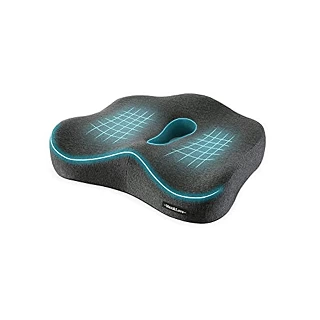
What a coccyx cutout actually does
The U-shaped gap at the back removes contact under the tailbone entirely, so the weight is carried by the sit bones either side. For someone with tailbone pain after a fall, or who simply cannot sit long on a hard chair, that redistribution is the whole point.
It is not a cure for anything. It moves load. If the pain is coming from somewhere else — hip, lower back, sciatic nerve — a cutout may not help at all.
Why memory foam sometimes disappoints
Memory foam softens with body heat and compresses over time. On a firm dining chair it is excellent. On an already-soft armchair it can bottom out, leaving the person effectively sitting on the chair frame with an extra layer of nothing.
Firmer, higher-density foam lasts longer under a heavier person. A cushion that feels luxurious in the first minute is often the one that flattens by month three.
The twenty-minute rule
No cushion prevents pressure damage on its own. Skin needs the load lifted, not just spread. For anyone sitting for long stretches, shifting position — leaning to one side, standing briefly, a small lift on the armrests — every twenty minutes or so matters more than the cushion under them.
If skin over the tailbone, hips or heels goes red and the redness does not fade within about twenty minutes of relieving the pressure, that is worth a call to a nurse or GP rather than a different cushion.
Heat and massage cushions
A heated back cushion is a comfort item, and a good one. Warmth relaxes muscle and makes sitting more bearable.
Two cautions. Anyone with reduced sensation — from diabetes, neuropathy or after a stroke — may not feel a pad getting too hot, so use the lowest setting and a timer. And never use heat on skin that is already red or broken.
Choosing between the two we stock
- Sitting long at a table or in a wheelchair, tailbone the problem → contoured cushion with cutout.
- Sitting in a recliner, back and shoulders the problem → heated back pad.
- Both are used in the same chair → cushion under, pad behind, and check the chair is still a comfortable height.
What we stock for this
- SitEase Memory Foam Cushion — contoured with a coccyx cutout, for chairs and wheelchairs
- RelaxSeat Heated Back Pad — warmth and massage for a recliner or dining chair
- CarryAll Walker Basket — so a cushion is not the thing being carried on a lap
Read next
- Bed Rail or Stand-Assist Handle: Which One?
- Preventing Falls at Home: A Room-by-Room Check
- All articles
General comfort information, not medical advice. Persistent pain, numbness, or skin that stays red after pressure is relieved should be looked at by a doctor or nurse.


