Home Blood Pressure: Getting a Reading You Can Trust
Health & Wellness · How-to · 6 min read
A home blood pressure reading is only useful if it is taken the same way every time. Most of the variation people see between readings is not their blood pressure changing. It is the method changing.
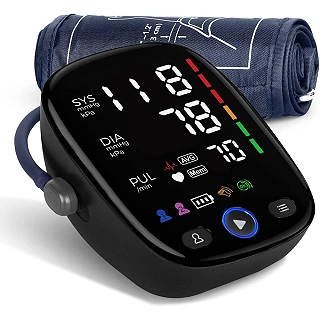
The five minutes before matter more than the machine
Sit still, back supported, feet flat on the floor, for five full minutes before the cuff goes on. No talking, no phone, no television. This alone moves a reading more than most people expect.
No coffee, cigarette or exercise in the thirty minutes before. Empty the bladder first — a full one raises the number.
Cuff position
The cuff goes on a bare upper arm, not over a sleeve, with the bottom edge about two fingers above the elbow crease. It should be snug enough that one finger slides under it, no looser.
The arm rests on a table so the middle of the cuff sits level with the heart. An arm hanging down reads high. An arm held up reads low.
If you use a wrist monitor the same rule applies and it is harder to keep: the wrist has to be held at heart height, supported, not resting in the lap.
Take three, ignore the first
Take three readings a minute apart. The first is almost always the highest because the cuff inflating is itself a small startle. Average the second and third.
Do it at the same two times each day and write both down. A single reading tells you very little. Two weeks of readings taken the same way tells a doctor a great deal.
What the numbers are not
A home monitor is a record-keeping tool. It does not diagnose anything and it does not replace a clinical measurement. Readings taken at home are usually a little lower than readings taken in a surgery, which is normal and something your doctor already accounts for.
If a reading is very high or very low, or comes with chest pain, breathlessness, weakness on one side or confusion, that is not a moment for a second reading. Call for help.
Common reasons a reading looks wrong
- Cuff over clothing, or the wrong size cuff for the arm.
- Arm below heart level, or unsupported.
- Talking during the measurement.
- Legs crossed, or feet dangling.
- Measuring straight after walking into the room.
What we stock for this
- VitalCheck Upper-Arm Monitor — large display, stores previous readings
- VitalCheck Wrist Monitor — rechargeable, one-touch, easier to put on alone
- MedKeep Medicine Storage Box — keeps the monitor, cuff and medication in one place
Read next
General information only. This is not medical advice and a home monitor does not diagnose or treat anything. Discuss your readings, and any change to medication, with your doctor.


