Hearing Amplifier or Hearing Aid? The Honest Difference
Health & Wellness · Explainer · 5 min read
An amplifier makes everything louder. A hearing aid decides what to make louder. That one sentence explains most of the disappointment people have with the cheaper option — and most of the times it is genuinely the right buy.
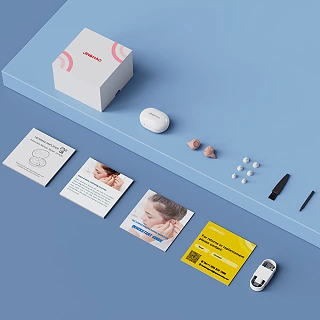
What an amplifier actually does
A personal sound amplifier picks up sound with a microphone and plays it back louder into the ear. Better ones let you adjust volume and cut some background noise, but the core job is uniform: everything goes up together.
That works well when the problem is simply that things are quiet. Television at a normal volume, one person talking across a room, a doorbell from the next room.
Where it falls down
In a restaurant, a family gathering or anywhere with several people talking, an amplifier raises the clatter along with the conversation. Many people find that harder to follow than the original quiet, not easier.
It also cannot fix a loss that affects some frequencies more than others — which is what age-related hearing loss usually looks like. Turning up the whole range makes the frequencies you still hear well uncomfortably loud before the ones you have lost become clear.
When a hearing aid is the answer
A hearing aid is fitted to a measured hearing profile. It raises the frequencies that need raising and leaves the rest alone, and modern ones handle noisy rooms in a way an amplifier cannot.
Since 2022 some hearing aids are sold over the counter in the United States without a prescription, so the gap in cost and hassle is narrower than it used to be.
A fair way to choose
If a person can follow one-on-one conversation in a quiet room and mainly struggles with the television and the doorbell, an amplifier is a reasonable, low-cost step.
If they are withdrawing from group conversation, mishearing words rather than missing them, or asking for repeats in quiet rooms, that is a hearing test, not a purchase.
A sudden change in hearing on one side, ringing, pain or discharge is a same-week appointment. None of those are amplifier territory.
Practical points that decide satisfaction
- Rechargeable versus disposable batteries — fiddly batteries end up in a drawer.
- Whether it can be put in and adjusted without help.
- A charging case, so it has one home and does not get lost.
- A trial period, because the only real test is a week of normal life.
What we stock for this
- SoundEase Hearing Amplifier — rechargeable pair with charging case and noise reduction
- ReadEase Clip-On Reading Light — for the other half of the problem — seeing what is being said
- DoorWatch Video Doorbell — a doorbell you can see as well as hear
Read next
General information only, not medical advice. A personal sound amplifier is not a hearing aid and is not intended to diagnose or treat hearing loss. For a change in hearing, see a doctor or an audiologist.


